PHIL 3160 – Philosophy of Happiness

What is it, how can we best pursue it, why should we? Supporting the study of these and related questions at Middle Tennessee State University and beyond. "Examining the concept of human happiness and its application in everyday living as discussed since antiquity by philosophers, psychologists, writers, spiritual leaders, and contributors to pop culture."

Up@dawn 2.0

Tuesday, October 19, 2021

Questions Oct 21

1. Why should the art of conversation be encouraged in children at an early age?

2. What did Montaigne think we owe other beings?

3. What did Diderot's Tahitian tell Europeans about how to be happy?

4. Pilgrimages increased to where in the 19th century?

5. What happens to people who try to rise above the human, according to Montaigne?

6. Montaigne thought what was the essence of wisdom? 

Discussion Questions:

  • Do you ever take part in fashionable entertainments which you privately dislike? Why or why not? 172
  • Are you "all in the open and in full view"? 173 Are most of us too much so, in this age of social media? 
  • What do you think of Rousseau's vision of pre-civilized humanity? 191
  • Have you ever made a pilgrimage to someplace? Why? 196
  • Do you share Montaigne's attitude towards mediocrity? 201
  • Do you ever try to "look down on [your] troubles from above" as if upon an ant colony? Was that an  early version of the cosmic perspective? 215
  • Is it possible to "dream of paradise and religious transcendence" without turning away from "the real historical world"?

Testing the neuroscience of free will with EEGs

Since it ended up being such a nice day out, I decided to post the video that was supposed to be in my presentation on here instead in case the rest of the class would prefer to be outside. 


This is just a short clip that demonstrates an experiment, popularized by Benjamin Libet in the 1980's that aimed to test if we are are the ones who are consciously making our own decisions. 


https://www.youtube.com/watch?v=fJPwULN7cYo

Presentation Summary 10/19/2021


Philosophical Approaches to Anxiety Presentation Summary: Karlie Stroud 

For my presentation I will be discussing the philosophical approaches to anxiety. I will be mainly focusing on the examples used in our reading How to Live by Sarah Bakewell, specifically chapter 6, Tips and Tricks. I will touch on each of the individual approaches as well as briefly touching on a few modern practices that have emerge from these approaches and theories. I found this topic extremely interesting, and I thought it would be pretty relatable for most.

Discussion Questions:

1.)    Do you think using the “reminiscing” approach would work for you?

2.)    Do you think there is one philosophical approach that could best alleviate anxiety for you, or do you think we have advanced to better methods?

 I included the link of my presentation:https://www.canva.com/design/DAEtMxDHvOQ/share/preview?token=W3y5E1h2seAJN7tpDxTi1w&role=EDITOR&utm_content=DAEtMxDHvOQ&utm_campaign=designshare&utm_medium=link&utm_source=sharebutton


H


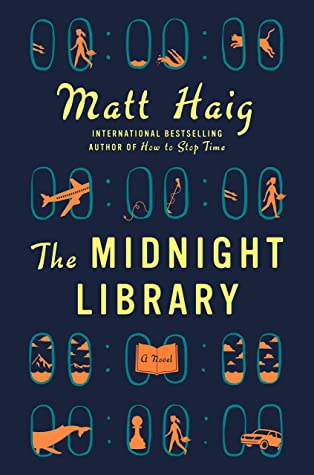
The Midnight Library

Between life and death there is a library, and within that library, the shelves go on forever. Every book provides a chance to try another life you could have lived. To see how things would be if you had made other choices . . . Would you have done anything different, if you had the chance to undo your regrets?


A dazzling novel about all the choices that go into a life well lived, from the internationally bestselling author of Reasons to Stay Alive and How To Stop Time.

Somewhere out beyond the edge of the universe there is a library that contains an infinite number of books, each one the story of another reality. One tells the story of your life as it is, along with another book for the other life you could have lived if you had made a different choice at any point in your life. While we all wonder how our lives might have been, what if you had the chance to go to the library and see for yourself? Would any of these other lives truly be better?

In The Midnight Library, Matt Haig’s enchanting new novel, Nora Seed finds herself faced with this decision. Faced with the possibility of changing her life for a new one, following a different career, undoing old breakups, realizing her dreams of becoming a glaciologist; she must search within herself as she travels through the Midnight Library to decide what is truly fulfilling in life, and what makes it worth living in the first place. g'r
“And that sadness is intrinsically part of the fabric of happiness. You can’t have one without the other. Of course, they come in different degrees and quantities. But there is no life where you can be in a state of sheer happiness for ever. And imagining there is just breeds more unhappiness in the life you’re in.”
― Matt Haig, The Midnight Library

Behind the shop

LISTEN. In Happiness today we're on to the next batch of answers to Montaigne's ultimate question: How to live?

5. Survive love and loss. 6. Use little tricks. 7. Question everything. 8. Keep a private room behind the shop.
Montaigne's great lost love was that of his slightly older friend La Boetie at just age 32, "soon to be 33... God granted me this grace, that all my life up to now has been full of health and happiness." I'd not have been so gracious and grateful myself, at that age... (continues)


Monday, October 18, 2021

Happy playlist

 Just for fun. Your suggestions?


Questions Oct 19

Post your comments on ch 5-8.

1. What hope did La Boetie express in his sonnet?

2. What in La Boetie's writing particularly resonated with Montaigne?

3. What two things did Stoics and Epicureans consider most important to get right? 

4. What doe epekho mean?

5. When brooding on death, Montaigne apparently forgot what?

6. What image of Descartes provides a neat contrast to that of Montaigne? 

7. How does Bakewell imagine Blaise Pascal, in contrast to Montaigne and the libertines?

8. What was Montaigne's "real liberty"? 


Discussion Questions:

  • Have you ever had a friendship like Montaigne's and La Boetie's? Do you hope to?
  • Have you personally discovered the power of habit? 96
  • Do you think you'll be able to meet death with La Boetie's equanimity and gratitude?103
  • Is there any admirable person in your life you think of as your "ever-present audience"? 108
  • What do you think of Plutarch's "ploy"?111
  • Did you know the Stoics "visualized time circling on itself" in a kind of pre-Nietzschean eternal recurrence? 112 Does the thought bring you comfort?
  • What do you think of amor fati? 113 Should we "accept everything just as it is"?
  • What do you think of Seneca's trick for practicing amor fati? 114
  • What do you think of Fideism? 121
  •  Is it really true that "human reason cannot be relied on"? 122
  • Do you agree that "nothing in life need be taken seriously"? 124
  • Do you think seated "meditation" is a better method than motile reflection?
  • Should our happiness depend on spouses, children, goods, and/or health? 162
  • Do you aspire to independence and self-sufficiency in old-age? 168

Happy gifts & responsibilities

 LISTEN. Report presentations continue in CoPhi today, and (among others) we'll consider Wittgenstein and Hannah Arendt. But I'm still thinking about the Ezra Klein podcasts I binged this weekend while walking the dogs and biking in the gorgeous sunny crispness of early-Fall. Nick Offerman on Wendell Berry and the power of walking, which "foments so much creativity in me and so many of the people I admire, writers and creative heads"), Holden Karnofsky on effective altruism and future AI (etc.), Richard Powers on taking seriously the gifts and responsibilities of being alive, and more. Delightful conversations all. Happiness is suddenly having so much more to think and talk about than you'd previously imagined... (continues)

Blue dot, not so pale

From The New York Times:

Hey Parler, My Blue City Isn't Turning Red

Nashville may be having an identity crisis. But our moral commitment to equality will never change.  

Margaret Renkl:
...In addition to its regressive tax structure, it's the state's politics that have made Tennessee so attractive to Parler and its ilk: A Vanderbilt University poll conducted last spring found that 71 percent of Tennessee Republicans and 30 percent of Tennessee independents still believe Joe Biden stole the 2020 election. No wonder that Tennessee, like Florida and Texas, has become a huge hub for misinformation.

If you're the kind of person who would join a social-media site where American citizens planned a violent raid on the Capitol, what's not to love about a state where one county's juvenile court can send to jail nearly half of all children brought before it, most of them Black (as Nashville's NPR affiliate, WPLN, pointed out in a yearlong investigation in partnership with Pro Publica)? What's not to love about a state where a church that uses semiautomatic rifles as part of its worship services is building a new training center and spiritual retreat — a church whose leaders were actually at the Capitol on Jan. 6?

But what Mr. Farmer seems not to know is that Nashville is not like Tennessee. We're surrounded on all sides by red counties, but here in Nashville we don't chant, "Build that wall." We cherish and protect immigrants. We don't march because we want to overthrow the government. We march because Black Lives Matter. We march because we believe in science, and we believe in women's autonomy. We march with Pride because L.G.B.T.Q. and nonbinary people are beloved members of the community.

You don't have to take my word for this. Look at the numbers: Joe Biden won Davidson County in 2020 with almost 65 percent of the vote, "the highest percentage of the city's votes since Franklin D. Roosevelt in 1944," Clay Risen pointed out in The Times in August. It's also greater than the margin by which Donald Trump won Tennessee... (continues)

Sunday, October 17, 2021

Richard Powers

As you may have guessed, I've been binging and enjoying Ezra Klein's podcast. Wanted to share my happiness in discovering a new intellectual provocateur. jpo

This Conversation With Richard Powers Is a Gift
The Ezra Klein Show

There are certain conversations I fear trying to fit into a description. There's just more to them than I'm going to be able to convey. This is one of them. Richard Powers is the author of 13 novels, including the 2019 Pulitzer Prize-winning "The Overstory." If you haven't read it, you should. It'll change you. It changed me. I haven't walked through a forest the same way again. And I'm not alone in that. When I interviewed Barack Obama this year, he recommended "The Overstory," saying, "It changed how I thought about the earth and our place in it." Powers's new book is "Bewilderment." You could think of it as 'The Innerstory': It is about how and whether we see the world we inhabit. It's about the nature and limits of our empathy. It's about refusing to die before we're dead and taking seriously the gifts and responsibilities of being alive. It is about how we change our minds and how we change our societies. It is about how we treat delusion as normal and clarity as lunacy. It is enchanting, and it is devastating. It is not just books through which Powers has been exploring these ideas. It is also through radical changes he's made to how he lives his life. That's where we start but far from where we end: This conversation touches on mortality, animism, politics, old-growth forests, extraterrestrial life, Buddhism and beyond. Mentioned: Finding the Mother Tree by Suzanne Simard Book recommendations: How to Be Animal by Melanie Challenger Rooted by Lyanda Lynn Haupt Ever Green by John W. Reid and Thomas E. Lovejoy You can find transcripts (posted midday) and more episodes of "The Ezra Klein Show" at nytimes.com/ezra-klein-podcast, and you can find Ezra on Twitter @ezraklein. Book recommendations from our guests are listed at https://www.nytimes.com/article/ezra-klein-show-book-recs. Thoughts? Guest suggestions? Email us at ezrakleinshow@nytimes.com. "The Ezra Klein Show" is produced by Annie Galvin, Jeff Geld and Rogé Karma; fact-checking by Michelle Harris; original music by Isaac Jones; mixing by Jeff Geld, audience strategy by Shannon Busta. Special thanks to Kristin Lin.

Listen on Apple Podcasts: https://podcasts.apple.com/us/podcast/the-ezra-klein-show/id1548604447?i=1000536849438

“The best minds of my generation…”

…There is a war for the brightest students in America. And for decades, one side has vastly outspent the other. Every year, the consulting...